This article may include affiliate links. We may earn a commission from purchases, at no extra cost to you. Read our disclosure.
In this guide
Apple crumble is forgiving, but its texture still depends on a few useful choices. The fruit needs space to soften, the topping needs a mixture of small crumbs and larger clumps, and the baking dish should not hide a deep layer of apples beneath a thin scattering of oats.
This version is intended for an ordinary home kitchen. It uses familiar ingredients and leaves room for preference: more cinnamon, a less sweet filling, or a mixture of apples already in the fruit bowl. It does not depend on a particular branded ingredient or special appliance.
Gather the ingredients
For a small baking dish, use four medium apples, a squeeze of lemon, cinnamon if liked, and a little sugar to taste. For the topping, begin with 75 grams of plain flour, 60 grams of rolled oats, 60 grams of butter, and 50 grams of sugar. Add a small pinch of salt if that fits your ingredients.
These are recipe quantities rather than dietary guidance. Apple size and sweetness vary, so adjust the filling after tasting a piece of fruit. If baking for someone with dietary restrictions, check every ingredient and use an established suitable recipe for substitutions that substantially change the mixture.
Cut the fruit consistently
Heat the oven to 375°F. Peel the apples if you prefer a softer, more uniform filling, or leave the skin on for more texture. Remove the cores and cut the fruit into similar pieces. Thin slices soften differently from large chunks, so choose one general size.
Toss the apples with lemon, cinnamon, and the sugar you want to use. Spread them in the dish. If the fruit forms a deep layer, use a wider dish or make two smaller crumbles. Changing dish dimensions affects baking, even when ingredient amounts stay the same.
Build a varied topping
Combine flour, oats, sugar, and salt. Rub in cool butter with your fingertips until the mixture includes fine crumbs and a few larger clumps. Stop before it becomes a smooth dough. Those different crumb sizes create a more interesting topping.
If the butter becomes very soft while you work, pause and cool the mixture briefly. A spoon or pastry cutter can help if you prefer not to use your hands. There is no need for a dedicated electric appliance for this small quantity.
Cover without compressing
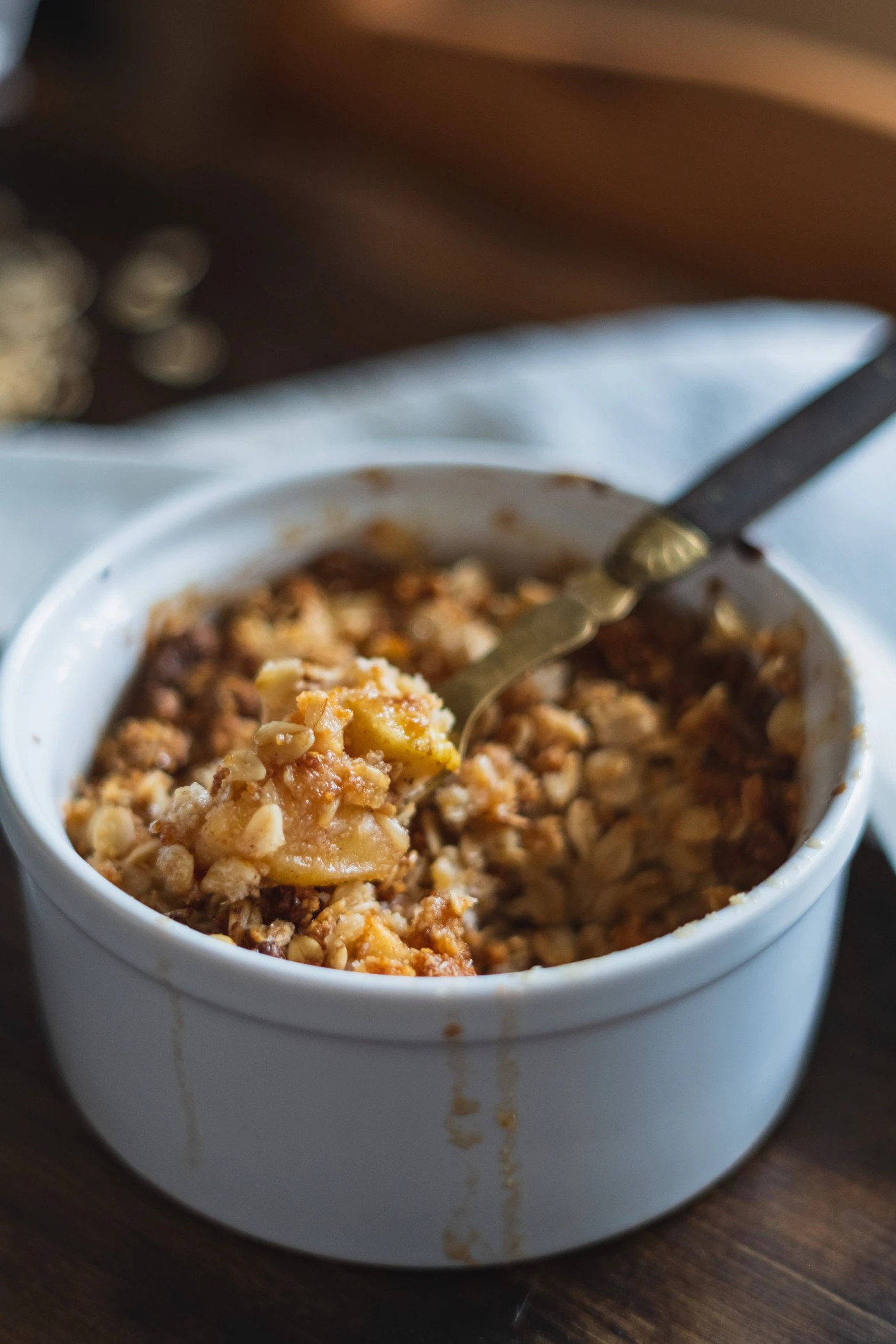
Scatter the topping evenly across the apples. Keep it loose rather than pressing it into a firm lid. You want hot air to reach the surface and fruit juices to bubble through a few gaps.
Set the dish on a tray if you are concerned about drips. Bake until the topping is golden and the apples are tender when checked carefully with a knife. If the top browns before the fruit softens, loosely shield it and continue checking. The visual finish and fruit texture matter more than an assumed exact time.
Let the crumble settle
Give the dish a short rest before serving so the bubbling filling becomes easier to spoon. Serve alone, with yogurt, or with ice cream according to preference. Warm fruit and crisp topping already provide contrast, so an accompaniment is optional.
A shallow spoonful lets you include both fruit and topping. If everyone takes only the crust first, the remaining dish becomes less balanced. Serving from one side in full-depth portions helps preserve the combination.
Change one element at a time
Pears can join the apples, though their ripeness changes how much moisture they release. A handful of berries adds a different flavor and may make the filling looser. Nuts add crunch to the topping but require attention to guests’ dietary needs.
Keep notes on useful changes if you bake this regularly. Record the dish and whether the fruit was sliced or chopped; those details explain the result more clearly than writing only “baked longer.” A familiar recipe becomes easier when its variables are visible.
Choose equipment you will reuse
A basic baking dish, bowl, and knife are sufficient. Before buying another dish, check whether your existing one gives the fruit a reasonable depth. Storage space matters as much as appearance when choosing a replacement.
Store remaining crumble according to appropriate food-storage guidance for the ingredients, and reheat only in cookware approved for that use. For savory tray cooking, try chickpeas and peppers. For an equipment decision with similar concerns about size and cleaning, see choosing a baking tray.